“The question isn’t whether intelligent machines can think, but whether humans can act responsibly with them.” – Adapted from Alan Turing.
“AI is like fire. It can cook your food, or it can burn your house down.” – Satya Nadella.
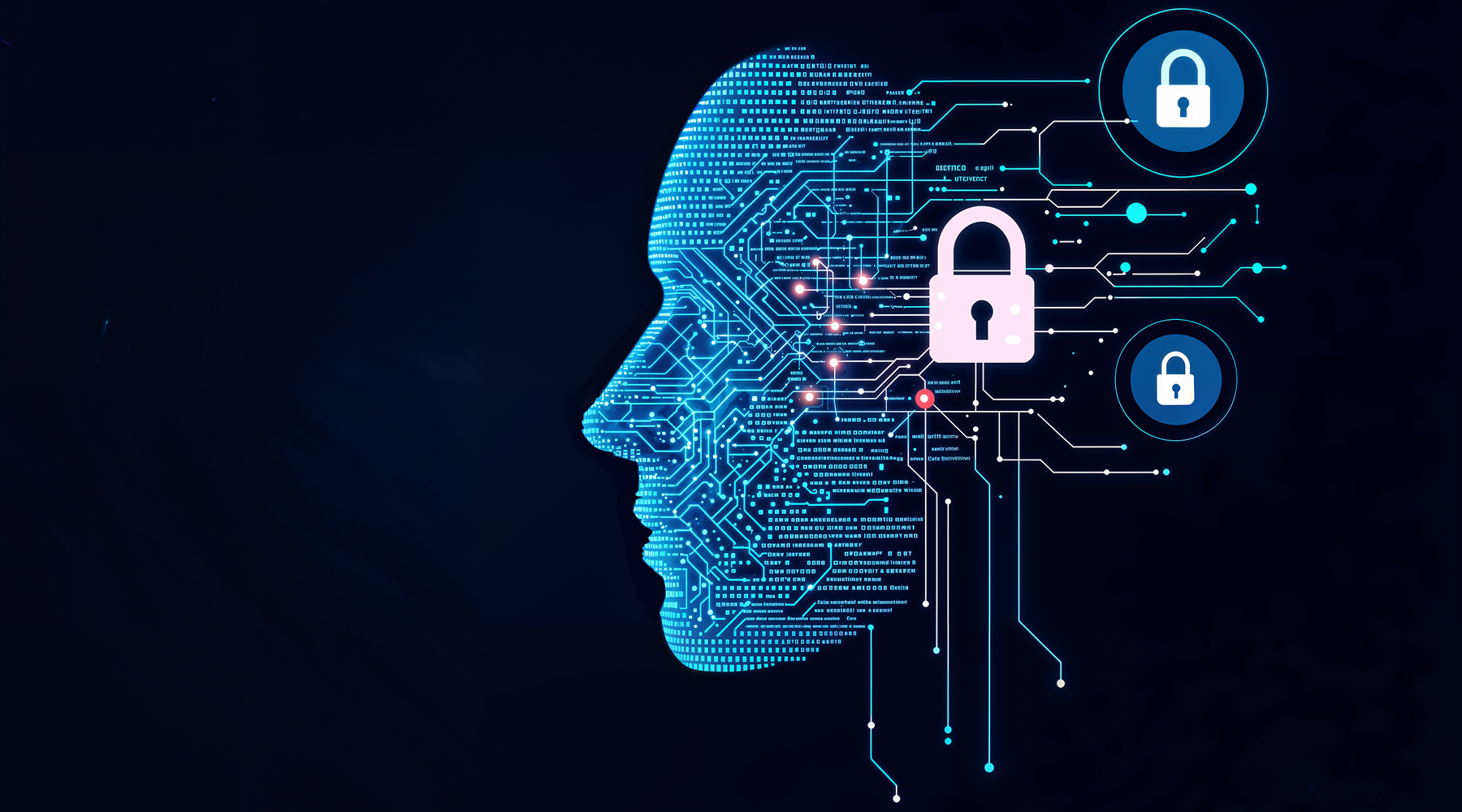
Artificial Intelligence (AI) has quickly become the backbone of modern cybersecurity strategies. From detecting anomalies in real time to automating threat response, AI in Cybersecurity is no longer futuristic—it’s the frontline defense against increasingly complex digital attacks.
But with power comes responsibility. The same algorithms that can safeguard critical infrastructure can also be misused for malicious purposes, raising urgent questions about governance, accountability, and ethics.
According to IBM’s Cost of a Data Breach Report 2024, organizations that deployed AI-driven security saved an average of $1.76 million per breach and detected incidents 108 days faster than those relying on traditional methods. That’s a game-changing advantage.
Yet another report by Gartner highlights that over 60% of organizations lack a formal AI governance framework in their cybersecurity stack.
This gap underscores why businesses, regulators, and solution providers like DLT Alert must lead the way in shaping ethical guardrails around AI adoption.
Why Ethics Matters in AI-driven Cybersecurity
At first glance, AI seems like a perfect ally for cyber defense—it can scale rapidly, analyze billions of data points, and act faster than any human team. However, its ethical implications cannot be ignored:
- Bias in Threat Detection: AI models are only as good as the data they are trained on. Poorly curated datasets can skew detection capabilities, leaving certain risks under-monitored while over-flagging benign activities.
- Transparency and Accountability: Many AI algorithms function as “black boxes,” making it difficult for teams to explain why a system flagged an event as malicious. In high-stakes environments such as financial services or healthcare, this opacity raises trust issues.
- Weaponization of AI: Just as defenders deploy AI to protect systems, adversaries use AI to automate phishing campaigns, create deepfake social engineering schemes, and even probe vulnerabilities faster than human hackers.
- Privacy Concerns: AI’s ability to process massive datasets raises concerns about user privacy. Without proper safeguards, AI systems can over-collect or misuse sensitive data.
In short, AI in Cybersecurity is a double-edged sword—its success depends on ethical governance.
Governing the Ethical Use of AI in Cybersecurity
Establish Clear AI Governance Frameworks
Organizations must create policies that define how AI models are trained, deployed, and monitored, which includes adopting explainable AI (XAI) approaches that make decision-making more transparent and auditable.
For example, if an AI system blocks a financial transaction, businesses should be able to trace the logic behind the decision.
Continuous Auditing and Validation
AI is dynamic. Threat landscapes evolve, and so do the techniques used by adversaries. Ethical governance requires continuous monitoring and revalidation of AI models to ensure fairness, accuracy, and reliability.
Regulatory Compliance
Global regulatory bodies are catching up. The EU AI Act, for instance, categorizes AI applications in cybersecurity as “high risk,” demanding compliance with strict standards of transparency, security, and accountability. Aligning with such frameworks helps organizations stay ahead of legal and ethical risks.
Human-in-the-Loop Decision Making
AI should assist—not replace—human judgment. By keeping humans in the loop, organizations ensure oversight in critical decisions, striking a balance between automation and accountability.
Industry Collaboration
Cyber threats don’t respect borders. Governance must involve collaboration between enterprises, regulators, and security providers. Shared frameworks and best practices can create a collective defense against both technical vulnerabilities and ethical lapses.
How DLT Alert Leads Ethical AI in Cybersecurity
At DLT Alert, we believe that ethical governance is not an afterthought—it’s the foundation of trust. Our solutions, like Cyra, the AI-powered three-in-one cyber underwriting and monitoring platform, are built with ethical design principles from the ground up.
Here’s how we embed governance into our work:
- Explainability: Cyra’s AI modules are designed to provide clear audit trails, enabling brokers, MGAs, and carriers to understand the “why” behind every risk decision.
- Bias Mitigation: We invest in diverse and representative datasets to minimize bias in underwriting and monitoring models.
- Regulatory Alignment: Our frameworks are built to comply with global standards, from GDPR to the EU AI Act, ensuring customers remain compliant while benefiting from AI’s speed and scale.
- Continuous Oversight: AI models are not static. DLT Alert ensures regular model validation, recalibration, and monitoring to maintain reliability.
In doing so, we transform AI from a black box into a transparent partner for organizations seeking smarter, safer, and ethically grounded cyber risk management.

The Future of Ethical AI in Cybersecurity
The next decade will see AI move beyond detection to prediction—anticipating cyberattacks before they occur.
According to McKinsey, AI-driven cybersecurity could prevent up to 30% of global cybercrime damages by 2030, potentially saving businesses trillions of dollars. But this vision will only materialize if ethical guardrails are in place.
Companies that ignore governance risk face reputational damage, regulatory penalties, and even operational failures. On the other hand, those that prioritize responsible AI adoption will not only strengthen their security posture but also win the trust of customers and partners.
Final Thoughts
AI in Cybersecurity is one of the most powerful tools businesses have today—but its power must be balanced with ethical responsibility. The conversation is no longer about whether we should govern AI, but how effectively we can do it.
DLT Alert is committed to leading this charge. By embedding transparency, fairness, and compliance into our AI solutions, we help organizations navigate the complex intersection of technology, ethics, and cyber resilience.
As we move into an era where cyber risks evolve daily, the organizations that thrive will be those that treat ethical AI not as an obligation, but as a competitive advantage.
Also Read: Understanding Microsoft Secure Score: A Path to Better Security